

Picture this: you’re waiting for that all-important call, your iPhone is fully charged, and suddenly—poof! It dies. Panic sets in. But wait, if it’s dead, will it still ring? It’s a question that’s puzzled many, and the answer might just surprise you.
In a world where smartphones are practically an extension of ourselves, understanding what happens when they kick the bucket is crucial. Whether you’re a tech enthusiast or just someone who’s lost a few too many phones to the dreaded low battery, knowing the ins and outs can save you from unnecessary stress. So let’s dive into the mystery of the silent iPhone and uncover the truth behind those missed calls when your device is out of juice.
Understanding iPhone Functionality
iPhones exhibit specific behaviors when it comes to power and notifications. Understanding these can clarify the ringing functionality during battery depletion.
Power States and Notifications
Power states determine an iPhone’s ability to receive notifications. When the device is completely dead, it cannot accept incoming calls. A device in low battery mode may still ring if a call comes in before it fully powers down. If the iPhone runs on low battery, notifications may still relay until the battery drains entirely. Battery state affects how notifications arrive, impacting user experience significantly.
Ringing Mechanism Explained
The ringing mechanism involves signaling the phone when a call comes in. An iPhone, when out of battery, ceases all operations, including ringing. Signals from cellular networks can’t connect to a powered-off device, stopping calls from reaching it. Voicemail notifications only appear once the device is charged. Incoming calls to a dead iPhone redirect to voicemail, ensuring no calls ring through.
Reasons an iPhone May Be Unresponsive
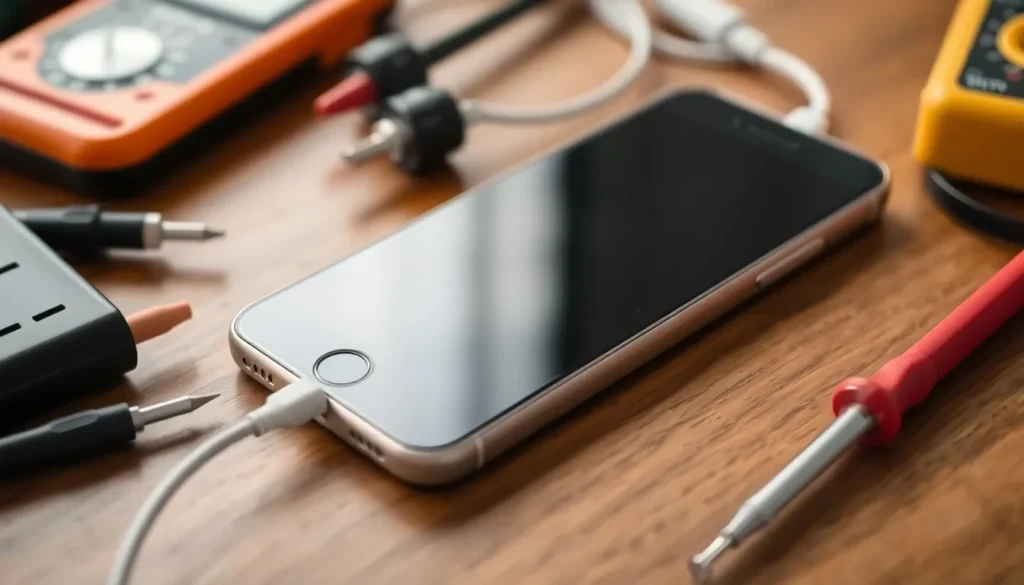
An unresponsive iPhone may stem from several issues. Understanding these can help identify the cause and potential solutions.
Battery Drain and Power Issues
Battery drain often leads to an unresponsive device. Regular usage can gradually deplete battery life, resulting in a dead phone. If users notice their device shutting down unexpectedly, battery health may be compromised. Additionally, temperatures extreme to either end can affect performance, causing shutdowns even with a charge remaining. Charging the phone might temporarily resolve power issues, but essential to monitor battery health through settings.
Hardware Malfunctions
Hardware malfunctions can also render an iPhone unresponsive. Damage from physical impacts can impact internal components leading to charging problems. Liquid exposure frequently poses risks, potentially short-circuiting internal parts. Components may also wear out over time, preventing the device from responding. If symptoms persist, a professional assessment is crucial to identify the exact cause and necessary repairs.
What Happens When an iPhone is Dead?
When an iPhone is completely dead, it cannot accept calls or display notifications. The device is entirely non-functional, which means no ringing occurs.
Incoming Calls and Notifications
Calls to a dead iPhone are redirected to voicemail immediately. It’s essential to note that a device in low battery mode can still ring, provided it hasn’t fully powered down yet. Users might receive notifications of incoming calls if the battery is low but not depleted. With a fully charged iPhone, notifications arrive normally, but once it dies, all operations cease.
Voicemail and Call Forwarding
Incoming calls to an unresponsive iPhone go straight to voicemail. Call forwarding settings apply only when the device has sufficient power. Without battery life, the owner won’t receive alerts or messages regarding missed calls. People can access voicemails later after recharging their iPhones. Being proactive about charging the device helps avoid missing important calls in the future.
User Experiences and Anecdotes
Experiences from iPhone users shed light on power-related issues. Many find that their devices behave differently under various battery states.
Common Scenarios
Some people notice their iPhones ringing shortly before complete shutdown. Incoming calls can still reach low-battery phones until they drain fully. Others report particular times when their devices unexpectedly died during a call, leaving them unable to engage further. Individuals using Bluetooth accessories might also encounter confusion, as those devices can stay connected while the iPhone is on the brink of power loss. Experiences like these highlight the importance of battery management to ensure essential calls don’t go unanswered.
Misconceptions and Myths
Misunderstandings about a dead iPhone abound. Some users believe a powered-off device can receive calls, assuming it functions like a traditional landline. Others think missed calls immediately notify them once the iPhone powers back on. In reality, calling patterns change significantly when a device is non-responsive. Users often discover that any missed calls go directly to voicemail, with no notifications until recharge. Identifying these misconceptions helps to clarify how smartphones operate when battery life is critically low.
Understanding how an iPhone behaves when it dies is crucial for users who rely on their devices for communication. A completely dead iPhone won’t ring or accept calls as it’s unable to function. Users can only expect incoming calls to go directly to voicemail without any notifications until the device is recharged.
Being proactive about battery management can prevent missing important calls. Regularly monitoring battery health and addressing issues promptly can enhance the overall user experience. By staying informed about their device’s capabilities and limitations, users can ensure they’re always connected when it matters most.


